
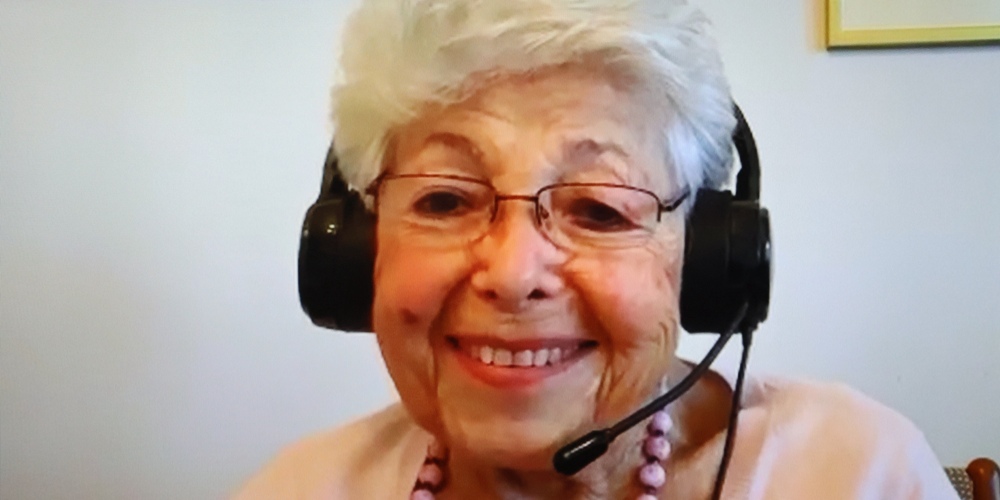
Carroll County High School students had a unique opportunity to hear history firsthand from a woman who survived the Holocaust as a young girl.
Through a virtual presentation offered by the United States Holocaust Memorial Museum, students listened as 95-year-old Holocaust survivor Rose-Helene Spreiregen shared her experiences growing up Jewish in Nazi-occupied France during World War II.
Spreiregen was just 8 years old when Germany invaded Poland in 1939, beginning World War II. As Nazi forces occupied France, her childhood changed dramatically. Jewish families faced increasing restrictions, including curfews, limited access to food and public places, and requirements to wear the Star of David.
At age 11, Spreiregen lost her mother, who was arrested while attempting to escape Nazi persecution and was later murdered at Auschwitz. “My mother was arrested and she was sent to one of the holding camps near Paris before they were deported to a place no one knew,” she told the students. “There was no food, no water, no hygiene facilities and it was hot in the cable car in August. Many died before they even got to Auschwitz. It seems the mothers never had a chance to survive. My mother was only 31 years old. I was 11.”
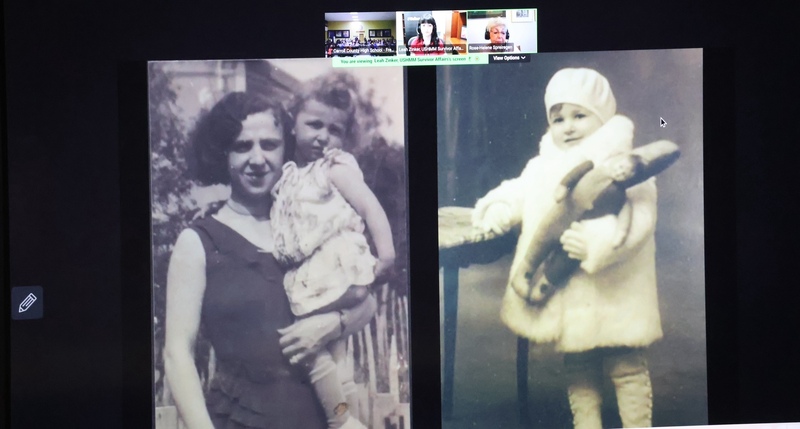 She and her grandmother spent more than a year hiding in her mother’s Paris apartment because it was supposed to be empty after her mother was taken away.
“My grandmother never left the apartment for 13 months,” she said, noting her grandmother did not speak French very well and feared her Jewish status would be revealed if she spoke. “My grandmother couldn’t leave the apartment so it was up to me to do all the chores that needed to be done and get some food with ration cards. I had to take care of my grandmother so I became a little adult and had to do all of these things," she told students.
Spreiregen described the responsibilities she assumed as a child, including standing in long lines to obtain food, enduring antisemitic insults and protecting her grandmother. She also recalled the fear of passing through German and French checkpoints while fleeing Paris, knowing that discovery could mean arrest.
Despite the hardships she endured, Spreiregen continued her education and eventually supported herself while attending night school. She shared memories of the war's end, the loss of family members and the challenges of rebuilding her life.
Students also had the opportunity to ask questions during the presentation, gaining a personal perspective on a period of history they typically learn about through textbooks.
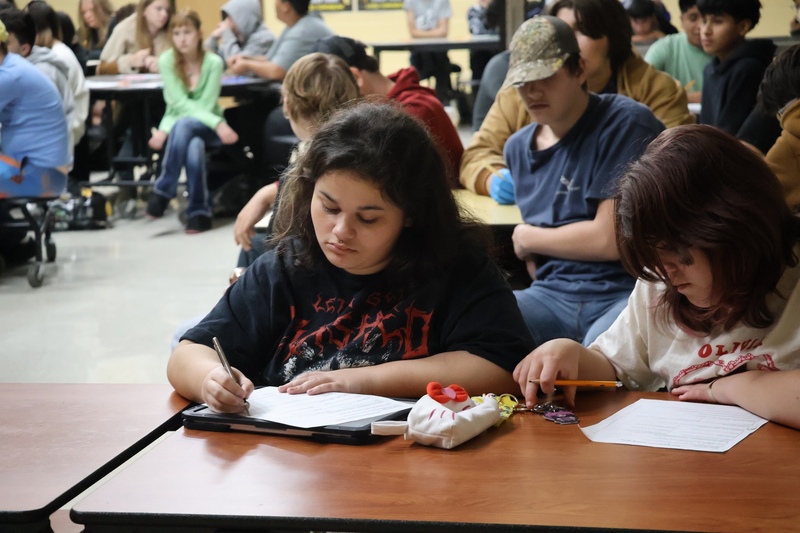 Today, Spreiregen is one of approximately 40 Holocaust survivors who volunteer with the United States Holocaust Memorial Museum to share their experiences with audiences across the country.
Her message to students was simple but important.
"If you see anything wrong, speak up. It will not go away. Try to be informed and be vigilant."
We are grateful to Ms. Spreiregen and the United States Holocaust Memorial Museum for giving our students the opportunity to hear this important firsthand account. As the number of living Holocaust survivors continues to decline, opportunities to hear their stories are especially meaningful. Their experiences remind us of the consequences of hatred and discrimination and the responsibility each of us has to speak up when we witness injustice.
Learn more about the museum's educational programs at www.ushmm.org.